Table of Contents
As the construction industry evolves, selecting the right project delivery method is essential to ensuring a project’s overall success. Two of the most common frameworks are the traditional Design-Bid-Build (DBB) model and the integrated Design-Build (DB) approach. While their names sound similar, they differ fundamentally in how and when an owner contracts different parties, how those partners are selected, and how the owner, designer, and contractor collaborate throughout each phase.
Because the chosen delivery method dictates stakeholder interactions and directly impacts project timelines, budgets, and quality, understanding these structural differences and when to apply each method empowers clients and construction companies to make informed decisions tailored to their specific project requirements.
What is design-bid-build
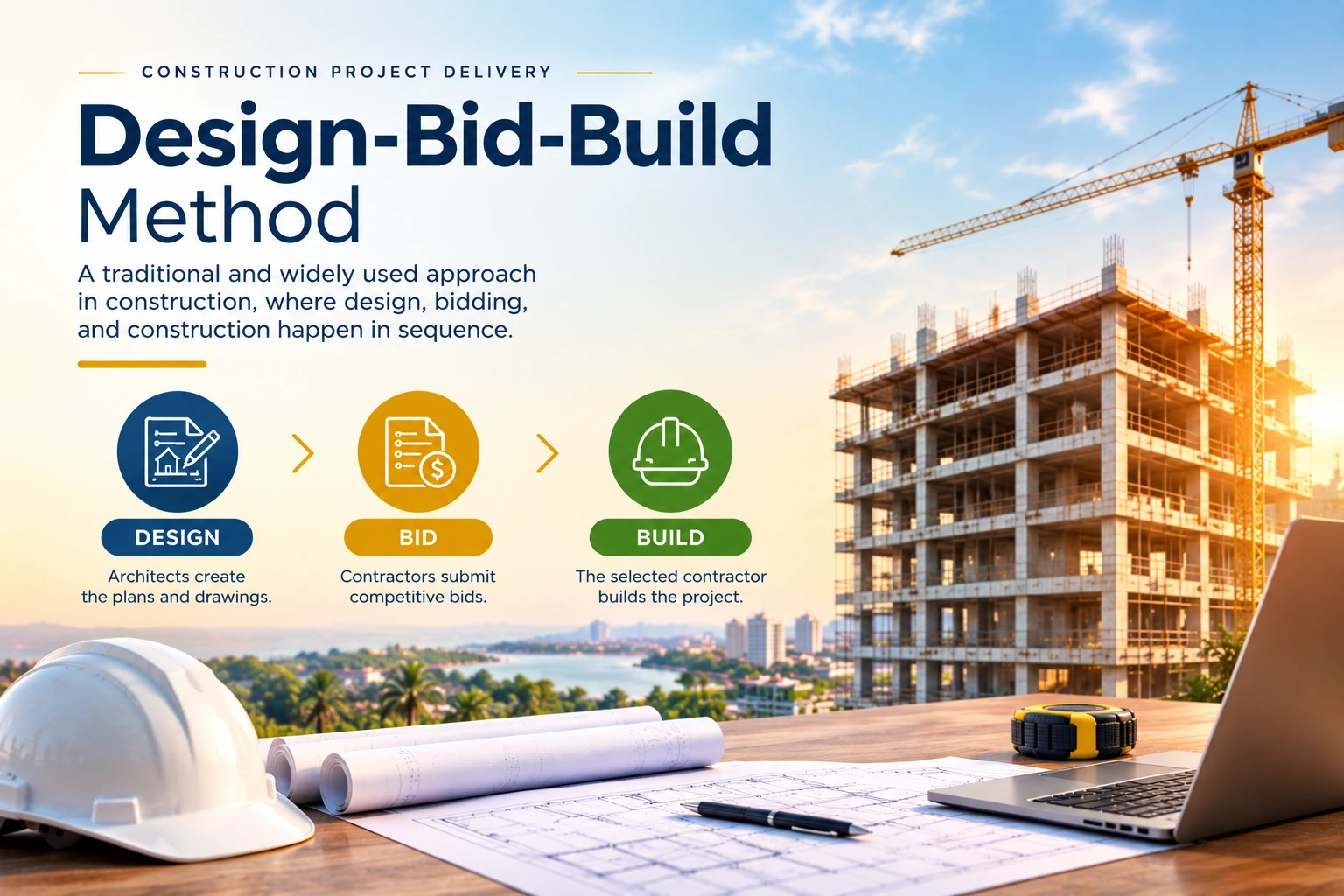
Design-Bid-Build (DBB) is the traditional, sequential method for constructing new facilities. Under this framework, a project moves through three distinct phases in strict chronological order: design, tendering, and physical construction with zero overlap between stages. The process begins when the owner hires consultants to prepare fully completed design specifications, issues these documents for competitive bidding, and awards the contract to the chosen builder.
Advantages of Design-Bid-Build
1. Separate contracts give owners greater direct control over project execution.
Enhanced Owner Control via Distinct Roles:
Design-Bid-Build establishes a distinct contractual division between design consultants and building contractors.
This clear separation grants project owners direct oversight over architectural plans, aesthetics, and material specifications before any physical work starts on-site.
Cost Certainty Through Competitive Bidding:
By issuing fully finalized architectural and engineering drawings for competitive bidding, owners can solicit transparent, market-driven estimates from multiple general contractors, driving down baseline construction expenses and establishing clear upfront cost visibility.
Structured, Sequential Workflow:
The disciplined, phase-by-phase framework ensures that the design, engineering calculations, and review phases are fully concluded and approved before groundbreaking, significantly minimizing on-site scheduling overlaps and ambiguity during active construction.
Disadvantages of Design-Bid-Build
Fragmented Accountability and Coordination Disputes:
When design and construction are handled under separate contracts, site issues quickly turn into finger-pointing. If key systems like plumbing, electrical, and structural framingfail to align before breaking ground, the job site quickly becomes a dispute over design mistakes, extra costs, and missed deadlines.
Lack of Constructability Input:
Without early builder input, practical site challenges like access, scheduling, and logistics get overlooked. This leads to unworkable designs that trigger expensive redesigns and project delays later on.
Owner Carries Direct Commercial and Financial Risk:
With separate contracts, the owner gets stuck in the middle of every dispute. When drawings have errors or missing details, the contractor charges extra fees and requests more time, leaving the owner to pay for the budget increases and delays.
Why to choose Design-bid-build?
1. Separate contracts give owners greater direct control over project execution.
2. Direct involvement means any execution snags ripple back to the owner directly.
3. Allows designers and builders to focus solely on their specialized strengths.
4. Prevents teams from spreading too thin by avoiding an all-in-one approach.
5. Public bidding windows invite diverse pros to secure highly competitive rates.
6. Clear divisions of responsibility simplify holding teams accountable for costs.
challenges in design-bid-build
schedule Delays & Extended Timelines:
Strict linear phases prevent work from overlapping, so any design or tendering setback stalls groundbreaking and prolongs total project completion.
Constructability & Coordination Gaps:
Builders have no early input to test practical site realities, while separated contracts foster finger-pointing and design disputes over complex MEP and architectural systems.
Uncontrolled Cost Overruns:
Low upfront bids frequently escalate during construction as missing specifications, unpriced design gaps, and site surprises turn into expensive contractor change orders.
Owner Carries Direct Risk:
The client sits legally and financially in the middle, shouldering the liability, extra expenses, and dispute mediation when design errors or constructability flaws emerge.
What Is Design-Build?
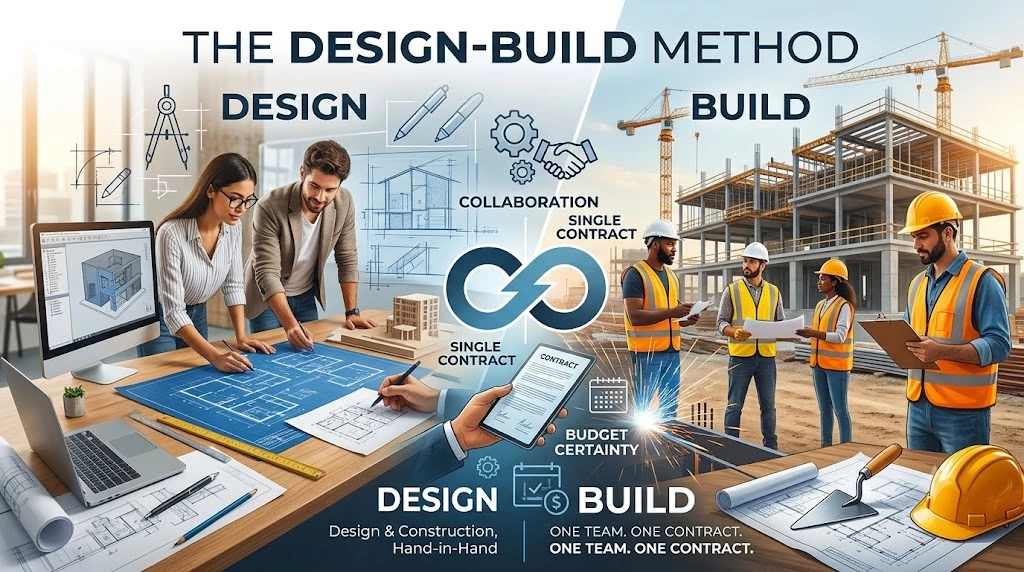
Design-Build (DB) is a construction method where a single contractor manages both design and building under one contract. Unlike traditional methods that require hiring architects and builders separately, Design-Build combines everyone into one team to improve communication, speed up work, and eliminate finger-pointing.
Advantages of Design-Build
Faster project delivery:
Eliminating the separate bidding phase allows design and construction to happen at the same time, speeding up the entire project schedule.
Single Point of Contact:
Having one team responsible for the whole build prevents finger-pointing and makes any problem much easier to solve quickly.
Fewer Costly Changes:
Because the builders help plan the design from day one, they catch practical issues early, resulting in fewer mid-project change orders.
Disadvantages of Design-Build
Reduced Owner Oversight:
Because the contractor leads the design phase, owners have less day-to-day creative input. This can be a drawback if you prioritize custom architectural aesthetics or specific interior details.
Risk of Quality Conflicts:
Managing design and execution under one contract removes external checks and balances. Builders may lean toward cost-cutting measures over structural elegance to protect their profit margins or speed up the build.
Expensive Mid-Project Changes:
Design-Build fast-tracks construction, often starting foundations before final finishes are approved. Once physical work begins, any major design revision becomes difficult, disruptive, and costly.
Why Choose Design-Build?
Single-Source Accountability:
Combining design and construction under one turnkey team guarantees end-to-end responsibility, eliminating disputes and ensuring consistent build quality.
Collaborative Control:
The contractor serves as a trusted advisor, maintaining transparent communication that keeps you informed while eliminating administrative headaches.
Faster Project Delivery:
Overlapping design work with site preparation and foundation casting removes procurement delays and significantly compresses timelines.
Common Challenges in Design-Build
Reduced Independent Quality Checks:
In traditional delivery, an independent architect oversees the builder on the owner’s behalf. In Design-Build, the designer and contractor belong to the same entity, removing that built-in system of checks and balances.
Early Scope and Budget Lock-In:
Total costs are established before architectural details and interior finishes are fully finalized. A vague project brief at the start can cause friction regarding material grades, MEP systems, and final specifications.
Costly Late-Stage Modifications:
Parallel design and construction accelerates the project schedule, but makes mid-project changes difficult. Modifying layouts after procurement or foundation casting begins often triggers steep delay fees and rework costs.
Design-Build vs. Design-Bid-Build: Key Differences
Evaluation Parameter | Design-Bid-Build (DBB) | Design-Build (DB) |
Contractual Structure | Two separate contracts: The owner signs separate contracts with the designer and the builder. | Single unified contract: One company handles everything from design through construction. |
Point of Contact & Accountability | Fragmented: Multiple Working separately leads to miscommunication, design disputes, and finger-pointing on site. | Single point of contact: One team handles everything, preventing blame games and simplifying communication. |
Workflow & Timeline | Strictly sequential: Three non-overlapping stages (design, bidding, and construction) result in longer project timelines. . | Fast-tracked & overlapping: Skipping the bidding phase lets design and foundation work happen at the same time. |
Owner Involvement & Oversight | High design oversight: The owner directly controls all architectural aesthetics, finishes, and specs before construction begins. | Collaborative, reduced day-to-day oversight: Contractor-led design limits the owner’s hands-on design choices during fast-track builds. |
Constructability Input | Late/absent builder input: Builders cannot check site logistics or trade schedules until construction actually begins. | Early builder integration: Builders get involved from the start to spot design flaws early and choose cost-effective materials. |
Tired of Construction Delays and Split Responsibilities?
Accelerate your build without compromising quality. Partner with Sri Lakshmi Construction for end-to-end Design-Build delivery from initial blueprint to final handover under a single, accountable team.
FAQs
In Design-Bid-Build, you manage two separate contracts (one for the architect, one for the builder), whereas Design-Build consolidates both architectural planning and physical site execution under a single contract with one turnkey entity.
A single-source turnkey model helps prevent budget overruns by offering fixed-price contracts and synchronized material sourcing, which eliminates inter-vendor disputes and speeds up the overall project timeline.
Heavy monsoon rains (often exceeding 3,500 mm from June to September) can severely impact schedules, requiring experienced contractors to align structural casting to finish the core shell before the rainy season begins.
Budget control is established upfront by providing a comprehensive Bill of Quantities (BOQ) with fixed material rates before site mobilization, which isolates the project from price volatility.