Table of Contents
What is Stamped Concrete Work?
Stamped concrete is a decorative technique achieved by pressing molds into fresh concrete to replicate various materials. This process offers endless options for patterns, textures, and colors.
Also referred to as stamped paving, it features a continuous, low-relief pigmented surface that can emulate diverse textures and elements, including cobblestones, brick, stone, slate, tiles, and wood. As a growing trend in home remodeling, stamped concrete provides a sustainable, cost-effective alternative to natural brick or stone. Surface designs mimicking wood, slate, stone, and brick allow for limitless custom aesthetic combinations.
In the concrete industry, applying stamped concrete for surfaces such as driveways, patios, sidewalks, and car porches represents an innovative and practical advancement. This decorative technique is widely favored because it elevates the visual appeal of flooring while simultaneously enhancing its long-term durability. Serving as an excellent replacement for costly granite or interlocking pavers, stamped concrete offers a cost-effective approach to landscaping and outdoor space design.
Benefits of Stamped Concrete for Mangalorians
Stamped concrete offers an ideal solution for coastal climates prone to extreme heat and heavy rainfall. Prolonged rainy weather often renders conventional concrete surfaces dangerously slick while causing structural degradation. Consequently, persistent downpours frequently disrupt daily outdoor routines due to hazardous, slippery paths.
Crafted by imprinting textured patterns into freshly poured concrete, stamped concrete delivers superior surface traction. Furthermore, it actively hinders the growth of moss and weeds that routinely invade standard joint gaps.
Why Choose Stamped Concrete for Your Property in Mangalore?
Rapid Application & Setup:
Rapid installation reduces downtime during project execution. Pouring and stamping expansive driveways, walkways, or patio spaces is considerably faster than laying individual pavers or tiles by hand, saving labor effort on tight construction timelines.
Minimal Maintenance Requirements:
Provides enduring durability with very little upkeep required. In humid conditions where porous stone or wooden decking demands constant scrubbing, pest control, or repairs, stamped concrete simply requires routine cleaning with mild detergent along with periodic resealing every few years.
Enhanced Slip Resistance:
Delivers dependable slip resistance and safety for areas prone to moisture or wet conditions. Given the frequent heavy rainfall and damp environment around outdoor entryways, courtyards, or verandas, incorporating anti-slip additives during the final sealant application significantly boosts grip and minimizes slipping risks.
Joint-Free Surface (No Moss or Weed Growth)
By creating a continuous, seamless surface, stamped concrete prevents weeds from sprouting and moss from accumulating. The humid climate and intense seasonal rainfall in Mangaluru frequently lead to algae, moss, and weed growth within the gaps of standard tiles or pavers. Because stamped concrete features no openings or joints, maintenance and cleaning in tropical weather become substantially simpler.
Monolithic Heavy Monsoon & Weather Resilience:
Provides robust, integrated structural integrity designed to endure severe weather and heavy downpours. Standard interlocking pavers and natural stones often shift, loosen, or wash away under intense monsoon rains; in contrast, stamped concrete creates an unbroken, continuous surface.
Difference between Exposed Aggregate Concrete & Stamped Concrete works
Feature | Exposed Aggregate Concrete | Stamped Concrete |
|---|---|---|
Surface Texture | Coarse, textured, and embedded with small stones | Smooth, embossed finish featuring distinct patterns |
Slip Resistance | Offers innate slip resistance thanks to its exposed aggregate finish | May become slippery during wet conditions, frequently necessitating the inclusion of anti-slip grit additives within the sealing layer. |
Cost | Typically delivers a more cost-effective and budget-conscious solution for covering expansive surface areas. | Higher overall cost driven by specialized tools, multiple color layers, and labor-intensive installation |
Maintenance | Simple upkeep; effectively conceals surface dirt and slight wear | Moderate upkeep; needs deep cleaning and fresh sealant applied every 2 to 3 years |
Barefoot Comfort | Less comfortable underfoot, presenting a coarse surface around pool decks or barefoot pathways | Offers a smoother feel, though textured patterns or glossy sealants may become slippery |
Best Uses | High-traffic exterior locations, vehicle driveways, inclined walkways, and utility service zones | Ideal for spaces prioritized for aesthetic appeal, such as courtyards, front entryways, patios, and pool decks. |
Best 3 places to install stamped concrete
Installing stamped concrete in outdoor spaces enhances the overall ambiance, giving it a refined, high-end appearance. Whether applied to home entryways, garden walkways, or outdoor gathering spaces, it delivers an exceptional walkthrough experience.
1. Pool decks
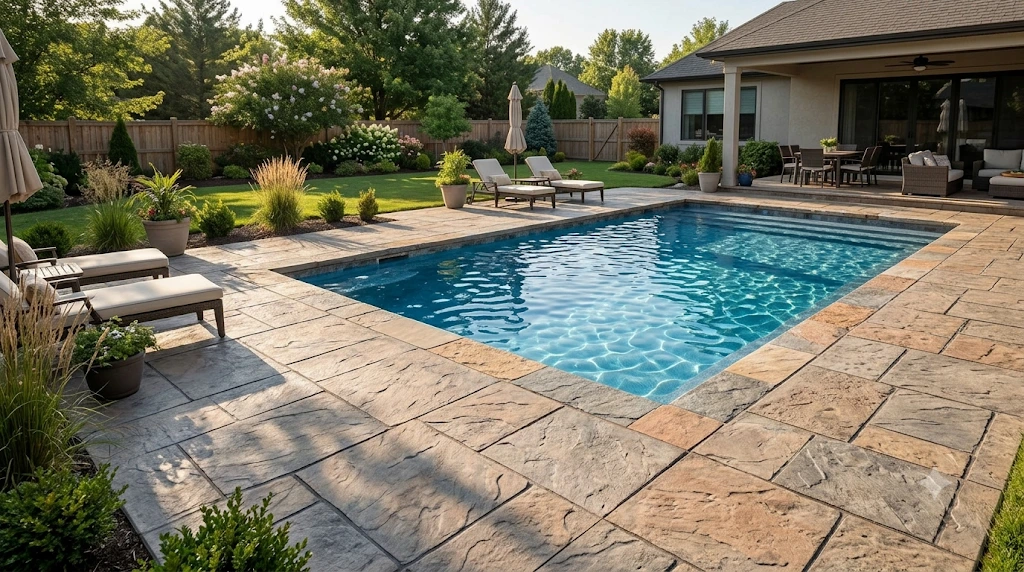
Installing stamped concrete around your pool deck delivers a luxury resort-style aesthetic at an affordable cost. This premium upgrade enhances the pool area with an impressive layout while eliminating concerns over cracked tiles or wet, slippery surfaces.
2. Entertainment areas
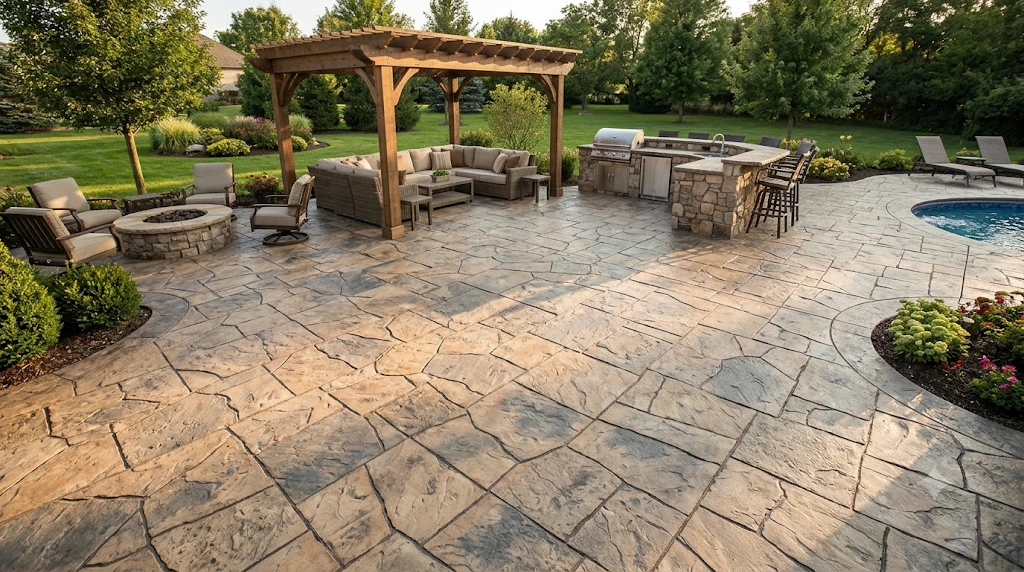
These outdoor spaces offer an ideal setting for fun and peaceful relaxation with family and friends. Featuring a premium flooring setup, they provide a comfortable surface to unwind. In humid regions like Mangalore, laying down to relax in these outdoor areas is a popular way to beat the heat.
3. Garden pathways
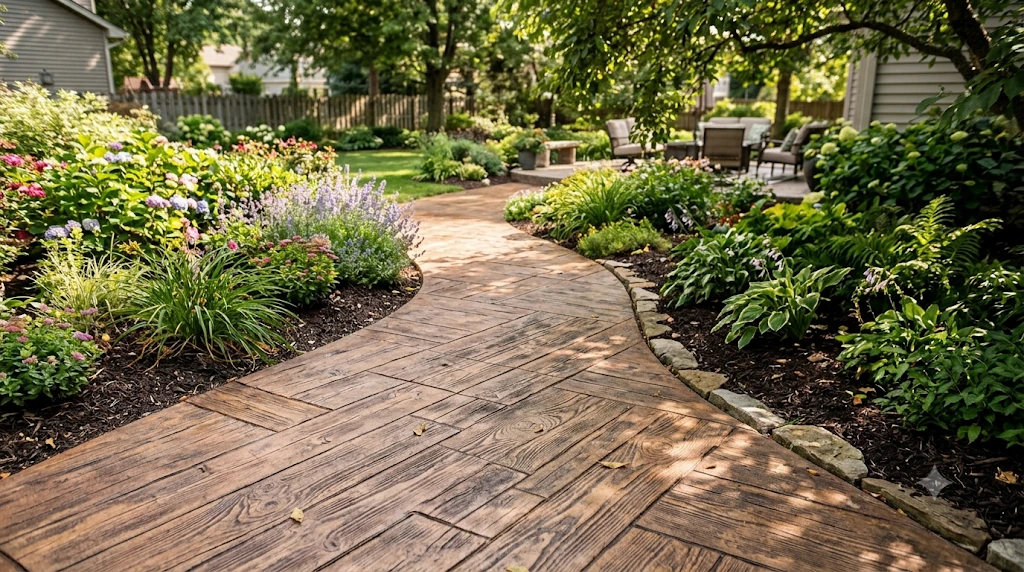
Use the concrete stamping process to complete your walkway paths around your backyard gardens or outline elements of your front yard for improved curb appeal. You can choose an intricate stamped concrete design that mimics the appearance of fractured earth, real stone and even wood for a durable, low-cost alternative.
Partner with Mangalore’s Trusted Construction Experts sri lakshmi constructions for Building a resilient commercial or residential property in coastal Karnataka requires uncompromising material quality. When you partner with Sri Lakshmi Construction, you eliminate the risks associated with poor material sourcing and on-site blind spots. Our expert civil engineering team strictly vets and tests all raw materials, ensuring your project meets the highest structural safety standards from the foundation to the final finish.
FAQs
1. How long will stamped concrete last?
Stamped concrete typically lasts 25 to 30 years or more (often up to 50 years structurally) when properly installed, drained, and maintained.
2. Does stamped concrete crack easily?
No, stamped concrete will not crack easily as long as it is properly cured under optimal conditions.
3. Is stamped concrete very expensive?
While stamped concrete involves additional expenses for coloring and pattern stamping making it roughly 10% more expensive than plain concrete it remains a cost-effective choice overall. Compared to alternative materials like brick or stone slabs, stamped concrete provides a much more budget-friendly flooring option.
4.which is the enemy for concrete?
Water poses the primary threat to concrete structures. Moisture can penetrate tiny concrete pores, accelerating the corrosion of internal iron reinforcement and compromising structural integrity over time.